Trace Profiles
The built-in workload deck: provenance, replay readiness, shape, and pressure signals on one collectible face.
Built-in trace deck
Every source gets a card, including reference-only datasets whose payload or cache schema is not locally replayable. The fingerprint is generated from its workload shape.
Reading trace metadata...
Figure 3
Benchmarking workflow
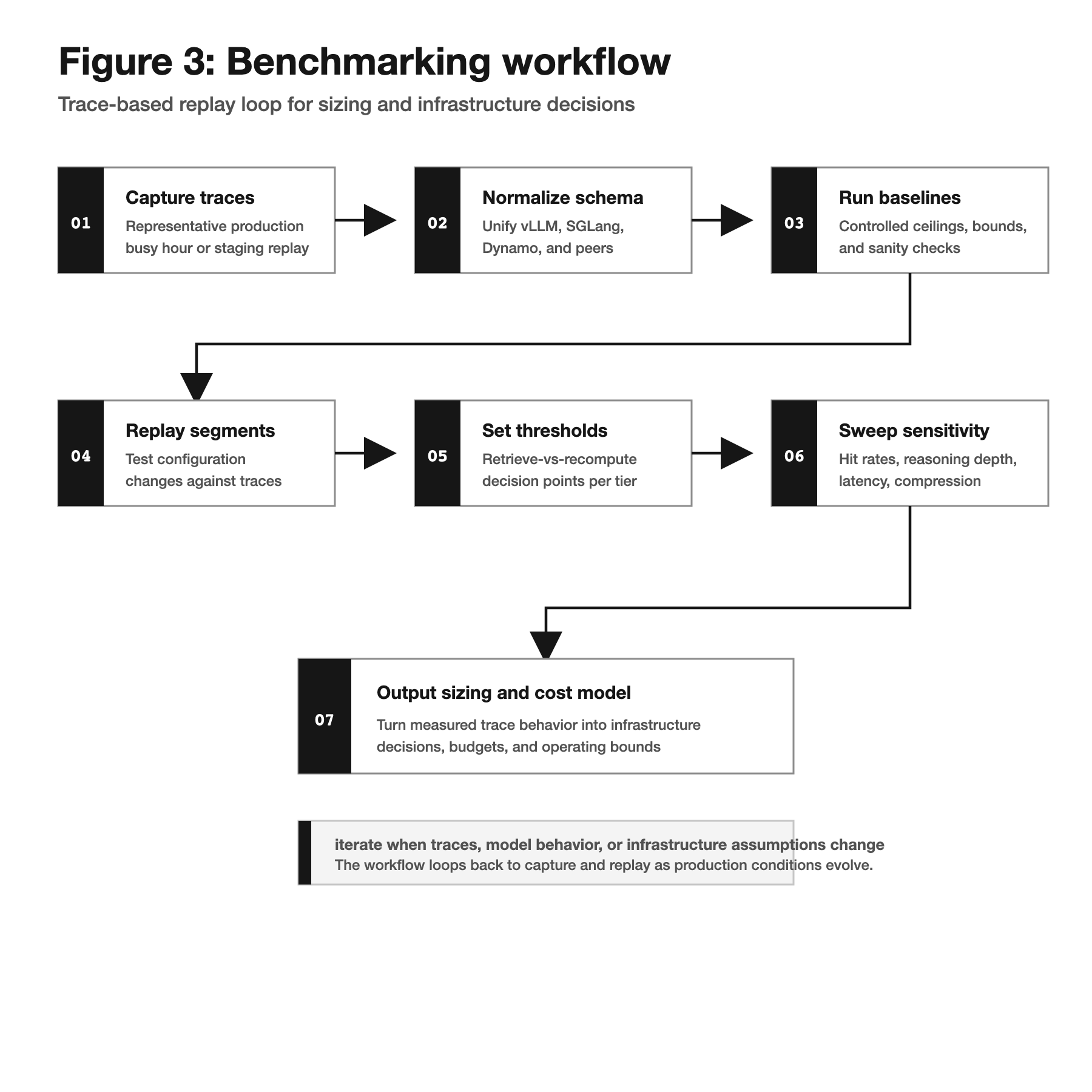
Benchmarking starts with representative traces and ends with sizing guidance that can survive configuration, cache-tier, and network sensitivity changes.
Efficiency model
Effective efficiency
Successful output volume only tells part of the story. The useful throughput signal has to be divided by all of the system costs that consume the run envelope.
Effective efficiency drops as memory, network, storage I/O, and power costs expand around accelerator time.
Figure 2
KV cache hierarchy latencies
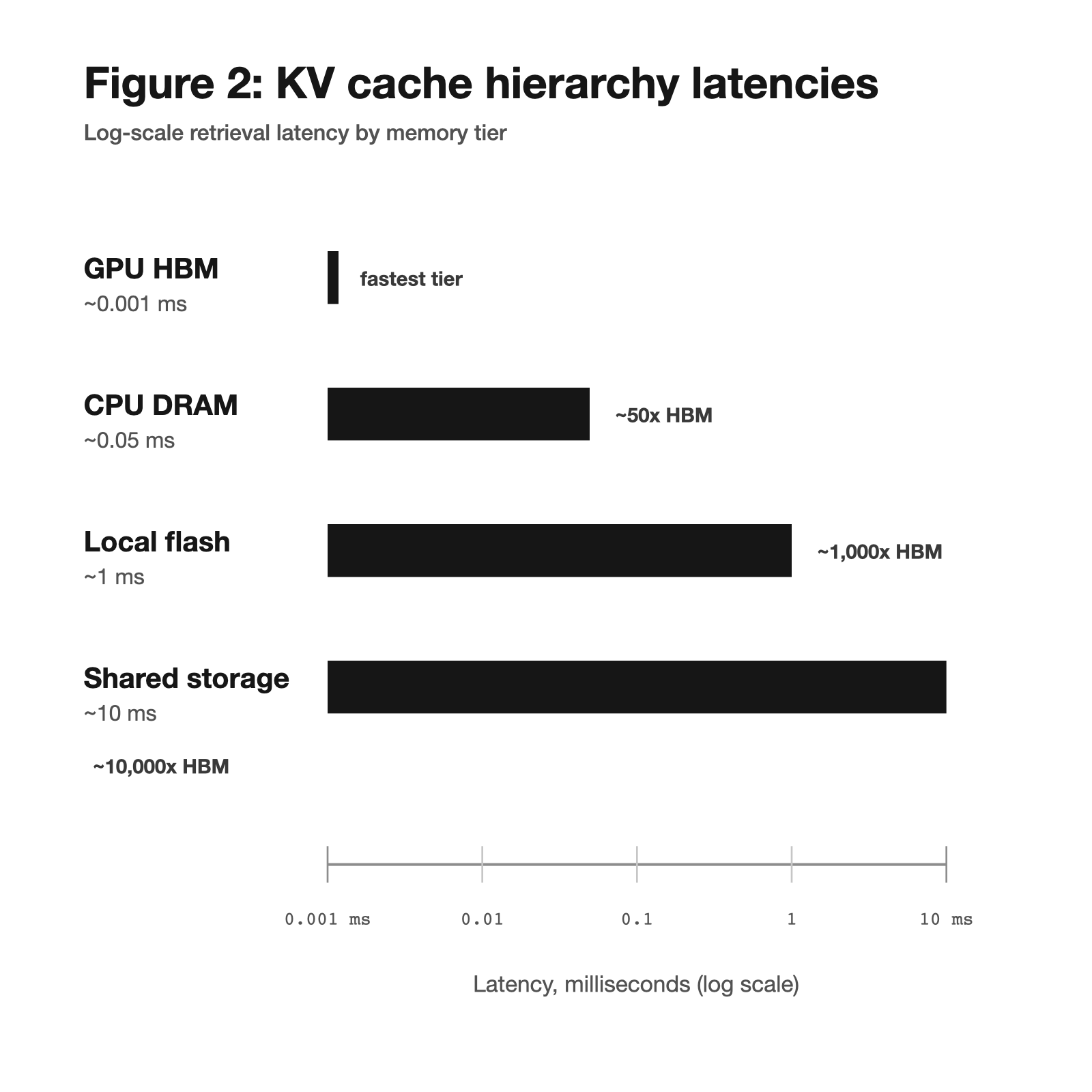
Retrieval speed versus recompute becomes the dominant decision once state leaves HBM.